
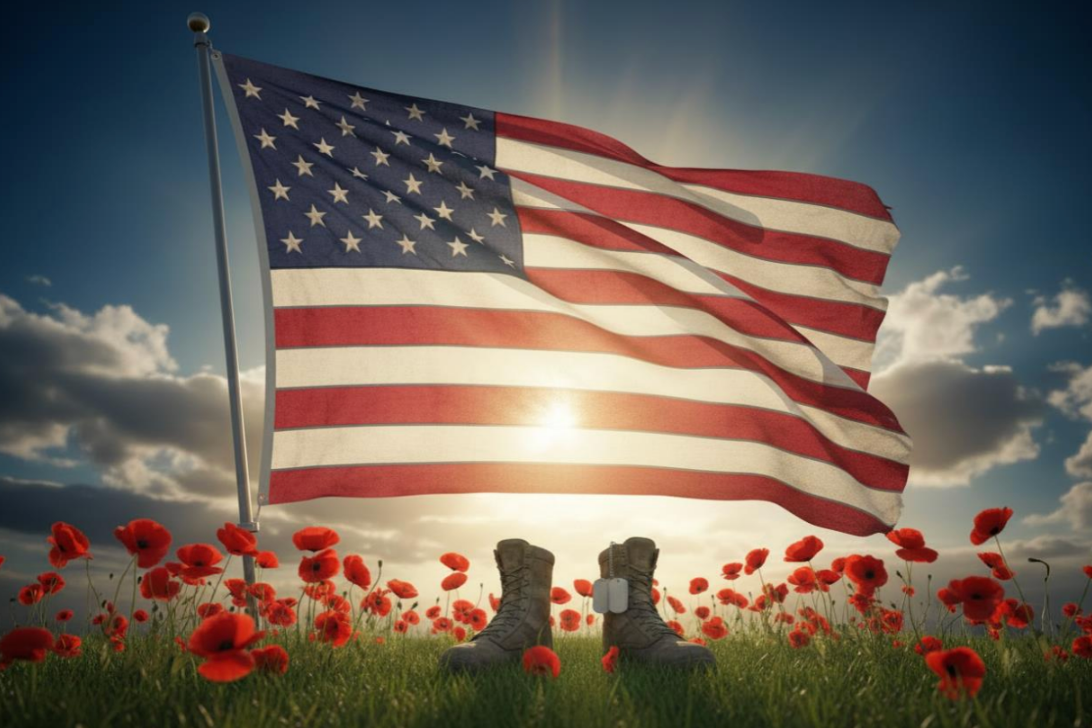

The Weight of Memorial Day: A Navy Veteran's Story of Mental Health and Healing
May 24, 2026

This is a subtitle for your new post
I have stood at too many bedsides. 


As a naval officer and psychiatric nurse practitioner, I have cared for active duty service members at some of the most vulnerable points of their lives — men and women who deployed without hesitation, who executed missions under conditions most people cannot fathom, who came back carrying things that do not show up on any imaging scan. I have sat across from a Petty Officer who could not sleep. A Marine on his third deployment who could no longer recognize himself in the mirror. An E-6 who told me, calmly and without dramatics, that he was not sure he wanted to be alive. 


I have also served. I know what it means to stand the watch. To compartmentalize on command. To prioritize the mission above everything — including yourself.


This Memorial Day, I want to speak plainly — as one service member to another, and as a clinician who has sat on both sides of that conversation. Because the men and women we honor today are not just the ones who died in combat. Some of them are the ones we lost long after they came home. And some of the people reading this are fighting a battle right now that no one can see. 


That matters. That is why we are having this conversation.

 Strength in the military is measured by what you can carry.

 Wisdom is knowing when to set it down. 

What Memorial Day Requires of Us


Memorial Day is not a day off. It is not a sales event. For those of us who have worn the uniform, it is an accounting.


We count the names. We count the years. We think about the ones who did not make it back — and increasingly, we think about the ones who made it back but did not survive what came after.


The Department of Veterans Affairs reports that veteran suicide rates remain significantly higher than the civilian population. Many of those individuals died with honorable discharges, with combat decorations, with the full respect of everyone who served beside them. They died because the systems around them — and sometimes the culture within them — were not built to catch them when the mission ended and the silence began.


As an officer, I was trained to assess risk, manage assets, and make command decisions under pressure. What I was not trained to do — what very few of us are — is recognize that the greatest risk to some of my shipmates was the invisible weight they were carrying without any language to describe it, and without any protocol for setting it down.


That gap costs lives. I have watched it happen. And I will not stay quiet about it.


The Ones I Could Not Bring Back


I have to say this plainly, because silence about it does more harm than the saying.


I have lost patients to suicide.


Active duty service members. People who came through my clinic, who I assessed, who I referred, who I followed up on. People who, by every metric available to me at the time, were engaged in their care. And then they were not here anymore.


There is no clinical training that fully prepares you for that. There is no after-action review that gives you the closure you are looking for. You go back through every note, every session, every decision point — not because you will find the answer, but because the mind insists on looking anyway. That is grief wearing the uniform of accountability.


I carry those patients with me on days like today. Not with guilt, though guilt visited me and stayed longer than it should have. I carry them with purpose. Because they are the reason I will not let this conversation go quiet. Because they deserved more access to every possible resource — clinical, spiritual, communal, energetic — and I am committed to making sure the people who are still here have it.


If you are a clinician reading this: the losses you carry are real. You are allowed to grieve them. You are also not omnipotent. You did not fail them alone, and the system that let them fall through is larger than any one provider. Carry the grief. Do not carry the verdict.


If you are someone who has lost a fellow service member, a patient, a shipmate, a friend to suicide: the same applies to you. Memorial Day holds space for them too. Say their name today. They earned that. 

I lost patients I fought for. I honor them by fighting

harder for the ones still here. 

What Service Taught Me About Asking for Help


Get support. That is the order. Not a suggestion. An order.


I say this as someone who resisted it for longer than I should have. I say it as someone who believed, for years, that my clinical training was sufficient armor against my own unprocessed experience. It was not. The training made me better at hiding it, which made it worse. 


If you are active duty, your installation has mental health resources. Use them. The stigma is real, and it is also survivable. Your career will not end because you asked for help — but it may end, and so might you, if you do not. 


If you are a veteran, separated from service, feeling like those resources are no longer available to you — they are. The Veterans Crisis Line is always operational. The VA has expanded telehealth significantly. And there are communities, like the one we are building at Sacred Space 69, that exist specifically for people who need a different kind of holding.


If you are an active duty service member reading this who has a patient, a shipmate, a subordinate, or a peer who is struggling — check on them. Do not wait for them to brief you. Ask the second question. Make the room safe.


Leadership does not stop at the mission. It extends to the people executing it.

Command presence is not just how you carry yourself in the field.

It is whether the people under your care know you will stay in

the room when things get hard. 

What Sacred Space 69 Offers the Warrior


Angela and I built Sacred Space 69 for people who have given a great deal to something outside themselves and are learning — sometimes for the first time — what it means to give something to themselves.


Veterans are our people. Active duty service members are our people. Military families, military spouses, military kids who grew up moving every eighteen months and learning not to get attached — our people.


We are not a clinical practice. We are a sacred space — which means we are the place you come when you have done the clinical work and need somewhere to land. Or the place you come first, when the clinical door still feels too heavy to open. 


Distance Reiki with Theresa is available worldwide by appointment — designed for people who cannot or do not want to be seen in person, who need support that travels with them, that does not require an intake form or a copay or a diagnostic code. No rank. No uniform. No performance required. 


Our free 15-minute consultation is exactly what it says it is — no commitment, no sales pressure, just a conversation. For service members and veterans who have spent years being briefed and debriefed and evaluated, we offer something rarer: a room where you are not being assessed. Where you can simply be. 


We also invite you to explore our tools for grounding and energetic protection — chosen with your specific needs in mind. You can find them at sacredspace69.com. 


To those we have lost — fallen in combat, lost to the invisible wars that followed — we do not forget your service. We honor it by fighting for the ones still here.


To those still serving: you are seen. You are valued. And you are worth the same level of care you give without hesitation to everyone else.


In Love and in Light,

June 8, 2026
A heartfelt reflection on how music, community, and the dance floor became a reminder that the greatest love we can discover is the one we cultivate within ourselves.
May 29, 2026
When life feels uncertain, faith becomes the bridge between fear and transformation. Discover the power of trusting the journey, even when the path isn't clear.
May 21, 2026
What happens when achieving everything you were told to want still leaves you feeling empty? A journey from burnout to alignment and self-discovery.

May 14, 2026
Your surroundings shape your mindset. Explore practical ways to design a sacred space that supports your well-being, focus, and inner peace.

Silhouette meditating at sunset with glowing chakra points and floating crystals over a cloudy sky
By Theresa Mayo May 14, 2026
Mental health is one of the most important conversations of our time. Millions of people worldwide are searching for ways to manage anxiety, overcome depression, process trauma, and find a sense of inner calm. While modern psychology and psychiatry offer powerful tools, many people are discovering that ancient spiritual practices — including chakra healing — can complement their mental health journey in meaningful ways. At Sacred Space, we believe that caring for your energy body and caring for your mind are not separate pursuits. They are two paths leading to the same destination: wholeness.More

Candlelit crystal and incense altar on a wooden table by a window, with flowers, bowls, and a smoky censer
By Angela Valeroso May 8, 2026
“Good juju” is more than a trendy phrase tossed around on social media. At its core, it reflects something deeply human: the desire to invite positive energy, protection, balance, and intention into our lives. Long before manifestation, journals and wellness influencers, cultures across the world practiced rituals designed to shift energy and create harmony between the physical and spiritual worlds.More

Woman in blue scrubs holding glowing light, surrounded by crystals and candles in a calm room
By Theresa Mayo May 6, 2026
This year's Nurses Week theme — The Power of Nurses — could not be more fitting. Every year from May 6–12, the world pauses to recognize the men and women who show up tirelessly, compassionately, and often invisibly to hold space for those in their most vulnerable moments. But 2026 asks us to go further than gratitude. It asks us to truly reckon with the power nurses carry — the power to heal, to witness, to transform lives at their most fragile.More
Abstract neon Gemini zodiac symbol with glowing blue orb, chat bubbles, and digital icons on a starry cosmic background
By Angela Valeroso April 27, 2026
April 25, 2026 marked the beginning of Uranus’ sustained transit through Gemini, a cycle that astrologers associate with major shifts in communication, technology, learning, and how people connect. Uranus represents disruption, innovation, and sudden change. Gemini rules information, language, media, and networks. Together, this transit is often described as a period of unexpected shifts in communication and ideas—a time when the way we think, talk, and share information changes quickly and unexpectedly. On a broader level, this era is linked to rapid advancements in technology, especially in AI, media, and digital communication, along with faster information cycles and new ways of learning and interacting.More

Hands holding glowing purple crystals in a sunlit meadow with rainbow light and wildflowers
By Theresa Mayo April 22, 2026
Welcome to your crystal journey! If you're just starting to explore the world of crystals or you're looking to deepen your spiritual practice, you've come to the right place.More

Person meditating in warm light with candles, crystals, and a glowing book on the floor
By Angela Valeroso April 17, 2026
Sit back, relax, Take it easy baby, and let it go. Don't let it getcha Don't let it to you.. - Crystal Waters   In the modern spiritual landscape, a quiet tension exists beneath the surface: the pull between authentic expression and the pressure to “market” oneself.More